The ICT EnergyLife+ project develops practical tools, methods and operating models for reducing the energy consumption of ICT devices and software, extending the lifetime of devices, and improving their repairability and modularity. The project also helps companies prepare for upcoming ecodesign requirements and make use of new business opportunities created by the green transition.
ICT EnergyLife+ is aimed especially at ICT device manufacturers and suppliers, design and product development organisations, software companies, public procurement organisations, and large organisations that use ICT equipment. The project focuses particularly on organisations operating in the Uusimaa region, but its results will benefit the ICT sector across Finland.
“In recent years, discussion about the environmental impacts of the ICT sector has focused on AI and the data centres that power it, using the latest chips. However, a large share of devices consists of different end-user devices, so we also need to pay attention to how they are developed. ICT EnergyLife+ brings together actors from across the value chain to find solutions for improving energy efficiency and environmental sustainability,” says Antti Sipilä, Green ICT Project Manager at TIEKE.
Practical tools for companies and procurers
The project will produce visual ecodesign guidelines, information on the energy consumption of ICT devices, methods for assessing the energy consumption of software and devices, product development solutions that support modularity and repairability, and new approaches to more energy-efficient ICT procurement. The project will also organise pilots, workshops, market dialogues and webinars together with companies and procurement organisations.
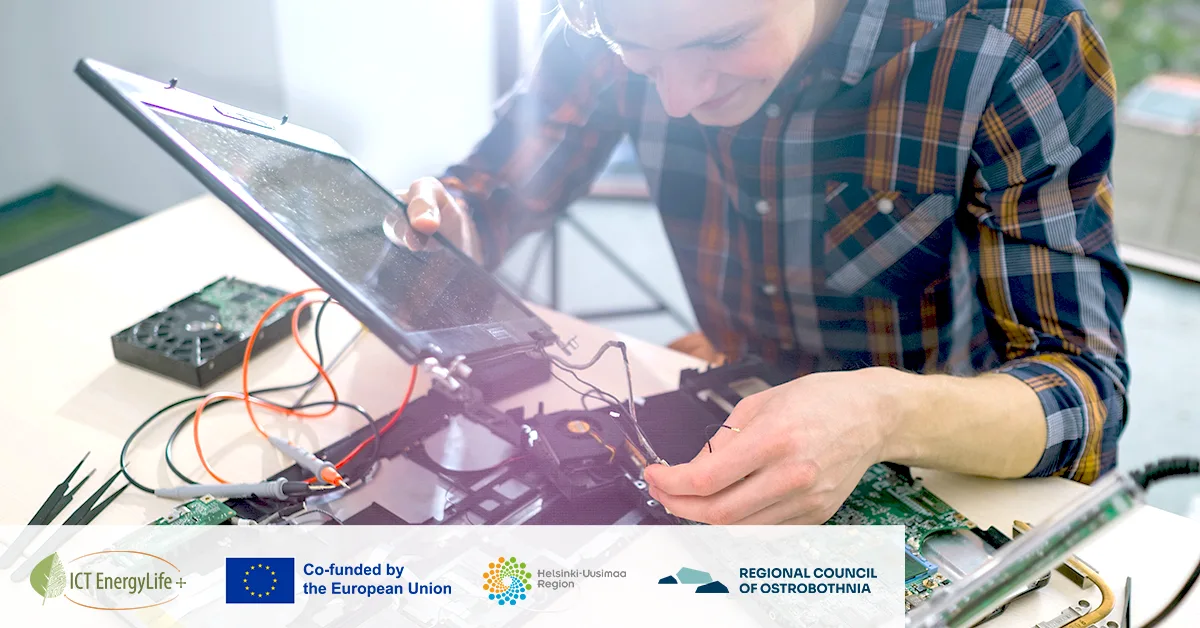
“Through this project, we want to give design and repair organisations an opportunity to combine ICT expertise with the expertise of industrial designers. Together, they can explore how devices could be made more modular and, as a result, more energy-efficient, repairable and less harmful to the environment. Through pilots like these, we will also gather information for developing procurement guidelines,” says Timo Nykopp, Project Manager at Metropolia University of Applied Sciences.
Public procurement plays a particularly important role in shaping the ICT market.
“Procurement is one of the most effective ways to influence the market. When energy efficiency, repairability and lifecycle thinking are systematically included in procurement criteria, this creates demand for products and services that support both competitiveness and climate goals,” Sipilä says.
The entire ICT value chain involved
ICT EnergyLife+ is a joint project carried out by four organisations: Metropolia University of Applied Sciences, LUT University, the University of Vaasa and TIEKE.
One of the project’s key strengths is its broad perspective. It brings together product design, software development, energy consumption measurement, business collaboration, research and the development of procurement processes. The aim is to create solutions that support the green transition in the ICT sector throughout the entire lifecycle.
“In the coming years, companies will need both expertise and practical ways of working to meet new requirements. We want to make sure that Finnish companies and organisations have the opportunity to lead the change instead of simply reacting to new obligations when they come into force,” Sipilä says.
If you would like to be part of this important work, book a meeting with TIEKE’s Green ICT Project Manager Antti Sipilä!
ICT EnergyLife+: Energy Efficiency and Emission Reductions in the Lifecycle of ICT Devices through Ecodesign
The Green ICT project ICT EnergyLife+ supports the ICT sector’s green transition and helps organisations prepare for emerging regulatory requirements by reducing energy consumption and greenhouse gas emissions throughout the lifecycle of ICT devices. The project strengthens expertise in ecodesign and energy efficiency while developing sustainable procurement criteria and processes. It also promotes the adoption of longer-lasting, more repairable and more energy-efficient ICT solutions.
For target groups, the project delivers practical guidance materials, tools, training, pilots and peer-learning opportunities.
Project duration
1 March 2026 – 31 May 2028
Project partners
The project is coordinated by Metropolia University of Applied Sciences. Project partners are LUT University, TIEKE Finnish Information Society Development Centre, and the University of Vaasa.
Funding
The project is co-funded by the European Union. Funding has been granted through the Regional Council of Helsinki-Uusimaa and the Regional Council of Ostrobothnia.
More information
- Project Manager Antti Sipilä, TIEKE
Collaborate with TIEKE?
Want to help organizations in themes such as digital competence, AI and data economy, real-time economy, or sustainability? Partner with us!
TIEKE Finnish Information Society Development Centre is a non-profit organisation founded in 1981 aiming to develop, improve and support a thriving information society and all its digital endeavours.
We help organizations in various ways:
- Projects and initiatives
- Networking and ecosystem work
- Surveys and studies
- Expert services and advice
- Webinars, online trainings and coaching programmes
- Materials and guides
We have a track record working in various project roles: coordination, partner, expert, comms and more. We run around 15 projects per year and are familiar with instruments such as CERV, Erasmus, ERDF and ESF.
We work with wide array of target groups such as SMEs, large companies, educational organizations, public sector and associations.
Don’t hesitate to get in touch to discuss collaboration opportunities with us!